I Just Inherited a San Francisco Home. What Are My Options?
SF Estate & Probate Sales Karen McCarthy June 9, 2026
SF Estate & Probate Sales Karen McCarthy June 9, 2026
You did not ask for this. A parent passed away, or a family member left you a property, and now you are staring at a house full of decisions without knowing where to start.
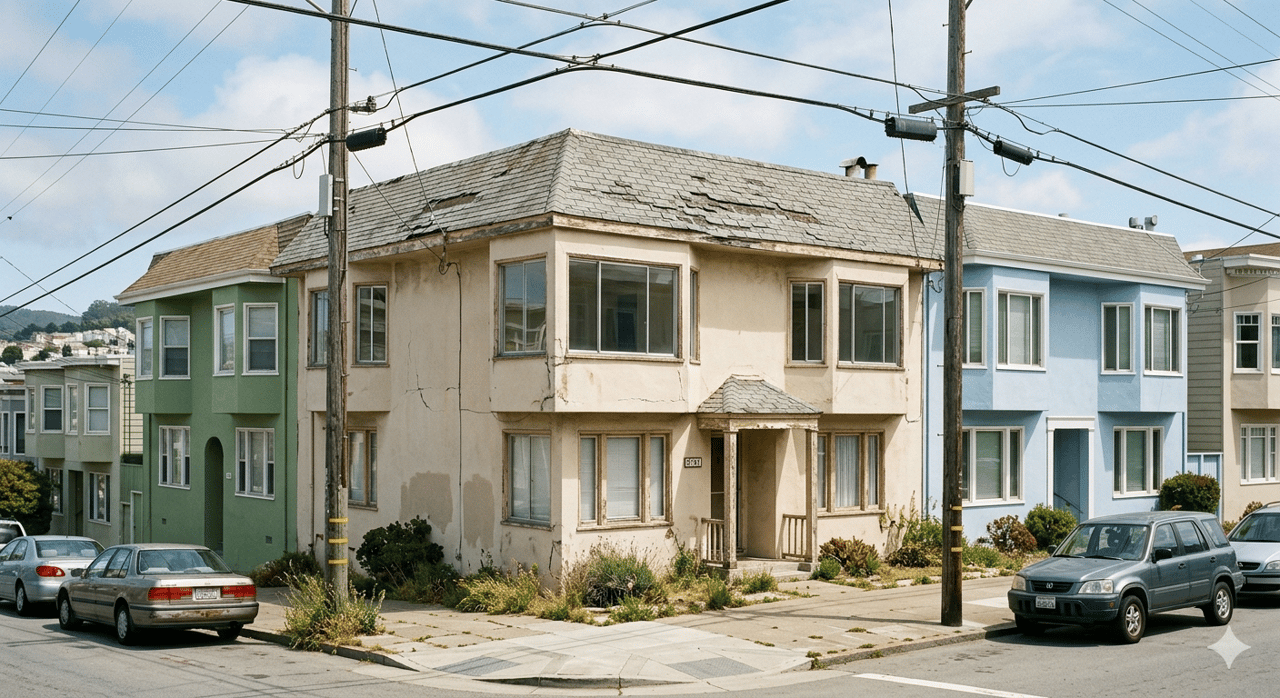
Maybe you inherited a classic family home in The Sunset District or a multi-unit building in Noe Valley. Maybe there are siblings involved. Maybe the home has existing tenants, needs significant work, or you live across the country.
Whatever your situation, this guide is your starting point. Just a clear picture of your options and what to consider before making any major financial moves.
The most important thing to know upfront is that you do not have to make any decisions immediately. The property is not going anywhere. Rushing into a sale, a rental agreement, or any other major decision without understanding the full picture is one of the most common and costly mistakes families make in San Francisco.
There is one strict exception: if you are considering keeping the property and moving in to preserve your family's low property tax base under California's Proposition 19, you have a one-year window from the date of transfer to do so.
Before you can decide what to do, you need to understand how the property is held. This means finding out:
The answers to these questions determine your timeline, your legal obligations, and your options. A probate sale involves the court system and takes longer. A trust sale can often move much faster. Tenant-occupied properties come with significant protections under San Francisco's strict rent ordinances. If you are not sure where to start, an estate attorney and a Certified Probate Real Estate Specialist can help you map this out quickly.
California's Proposition 19 changed the rules for inherited property significantly in 2021. Depending on the type of property and what you plan to do with it, your property tax bill could stay roughly the same or increase dramatically.
This is one of the most misunderstood and financially consequential areas for San Francisco families. Read my detailed guide on what happens to property taxes when you inherit a San Francisco home for the full picture.
Once you understand the legal structure and the tax implications, your choices generally come down to three paths.
Option A: Sell the property. For many families, this is the most logical choice. It is especially true when keeping the property is financially unsustainable after a tax reassessment, when siblings cannot agree on a long-term plan, or when nobody wants the responsibility of managing real estate. If you sell shortly after inheriting, a stepped-up basis typically applies, meaning you may owe little to no federal capital gains tax on the sale.
Option B: Rent the property. Some families choose to hold the property and generate rental income. This can make sense if the projected rental income comfortably covers the new property tax bill and ongoing operating costs. Be aware that San Francisco has some of the strongest tenant protections in the country. Before placing a tenant, even a friend or family member, understand your obligations as a landlord in this city.
Option C: Move in and keep it. If you are in a position to make the inherited property your primary residence, this can preserve the low property tax base under Prop 19 and allow you to build long-term equity in one of the world's most valuable real estate markets.
Inheriting a home in San Francisco means navigating real estate logistics, California probate law, property tax rules, and San Francisco rent ordinances all at once. No single professional covers all of these areas. You will likely need an estate attorney, a tax advisor, and a real estate agent who specializes in exactly this kind of situation.
As a Certified Probate Real Estate Specialist (CPRES) and Certified Trust and Probate Specialist (CTPS) with more than 15 years of experience in San Francisco real estate, I work with families navigating all three paths. I can help you understand your options, connect you with the right professionals, and guide you through whatever comes next.
If you want to go deeper on any of these topics, read my detailed guides:
If you have recently inherited a property in San Francisco or the Peninsula and you are not sure what to do next, start with a conversation. No pressure, no obligation, just clarity. Let's Talk.
Stay up to date on the latest real estate trends.

SF Estate & Probate Sales
Two Real San Francisco Estate Sales. Over $500,000 in Additional Proceeds. Here is How We Did It.
Retirement & Downsizing
When a "fix-it-or-get-cancelled" notice from your insurer turns into a retirement or estate planning emergency.

Retirement & Downsizing
The legal exemptions every SF empty-nester must understand before they sell.

Retirement & Downsizing
How San Francisco homeowners can take their low property tax rate anywhere in California.

SF Estate & Probate Sales
Property taxes, disagreements, and what happens when siblings cannot agree on what to do with the family home.

SF Estate & Probate Sales
How Proposition 19 treats single-family homes and multi-unit buildings very differently, and what it means for your family.
SF Estate & Probate Sales
A clear, stress-free guide for families figuring out what to do next.
No pressure. No obligation. Just an honest conversation about where you are and what makes sense for you.